

Whether you’re a newcomer, running a small shop, or managing a large-scale contract decorating business, trade shows are still an excellent way to get the latest updates on printing equipment innovations, industry news, and new products like apparel blanks and accessories that wholesale manufacturers release.
Historically, trade shows in our industry used to be slightly more fractured and focused on single specialties like apparel decoration or wide-format printing. Now, most shows span the gamut, so whether you’re a screen printer or cover other markets like wide-format, DTG, and signage (or all of the above), there’s something for everyone. Plus, multi-market trade shows like the Impressions Expo allow you to explore different industries if you’re curious about expanding.
In addition, decorated apparel and print industry shows have always been great places to network with other business owners and receive education from seasoned industry veterans.
That said, most trade shows, like the PRINTING United Expo are also massive, and getting through an entire convention center’s worth of exhibitors and classes can be exhausting. So before you hit that registration page, try these tips to make your next show count.
By the way, if you’re headed to Impressions Expo Long Beach this year, make sure you check out Inktavo’s full list of educational opportunities!
1. Plan and Set Goals
Goals for a trade show don’t have to be anything too lofty, but you want to have a shortlist before you head through those doors. Maybe you want to line up a new supplier for your shop’s T-shirt blanks, so have a few top picks of which apparel companies you want to visit and check out samples. Or, maybe you’re getting close to buying a new auto press. Find out where the equipment manufacturers on your wishlist will be at the show and when they’ll offer demos so you can see your potential investment in action and talk to experts about the press.
Part of planning ahead also means you must research the exhibitor list to save your steps. If you’re not prepared, your day can quickly become an exhausting routine of zig-zagging back and forth across the show floor, costing you time and energy, and you might miss some of the booths on your list.
Additionally, it’s worth reaching out to the exhibitors on your shortlist if you need to chat with them about a specific business question. Many of them can schedule you for an appointment so you’re not awkwardly hovering around the booth waiting to find a time to talk.
2. Get Educated
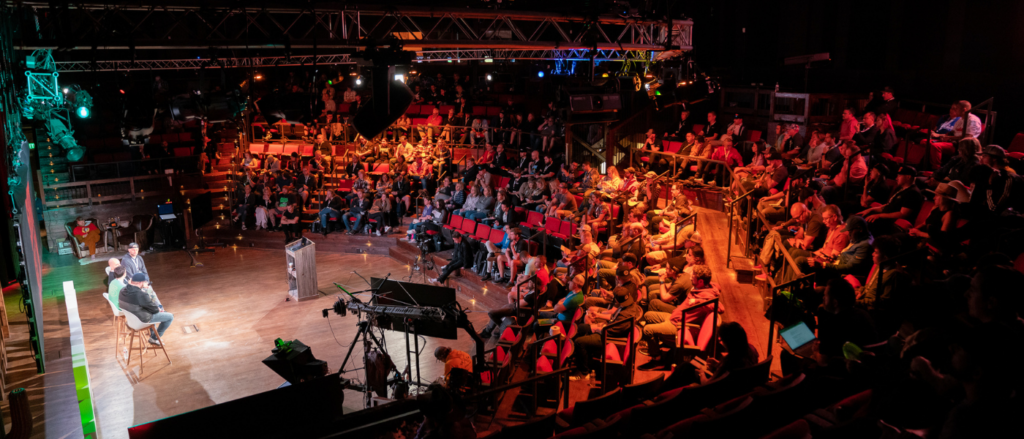
If you’ve already been to industry shows, you know that the event schedule is typically PACKED with classes. Whether it’s a panel discussion on new printing tech, deep dives on refining your graphic design techniques, or Q&A sessions, you could feasibly spend your entire trade show in classes instead of visiting exhibitor booths.
When reviewing the exhibitor list, make sure you earmark the most essential classes and are realistic about how much time you’ll have for each session. Many courses are now recorded and available online afterward for attendees. If you can’t fit in everything, find out which ones are available for streaming so you can watch them at your convenience.
Bonus: Education When You’re Not at Trade Shows
InkSoft and our other Inktavo family brands GraphicsFlow and Printavo, offer educational webinars throughout the year if you’re not able to travel. These informative sessions cover everything from printing techniques to industry recaps, with Q&A opportunities at the end of the session as well.
Here’s one of our recent classes:
3. Pack Lightly
You may’ve already learned this one the hard way. We’re not talking about what you take on the plane to your destination (though you’re probably better off packing light there, too!), but what you decide to pick up and haul around the trade show floor with you.
We work in a tactile industry, so nearly every booth you stop at will have some sort of free printed swag: a tote bag, a T-shirt, a koozie, a beanie, a water bottle, stickers, or all of the above!
It’s exciting to get free stuff, but just remember you’ve got to haul that gear around the show and then eventually fly home with it.
That’s not to say you shouldn’t take a few fun things with you, but consolidate so you’re not lugging around a bulging tote bag of promotional products while trying to visit booths and chat with exhibitors.
4. Stay Healthy & Rested
Sounds obvious, right? It’s easy to hit the floor when convention center doors open and grind away until 3 p.m., and all you’ve had to eat is that stale blueberry muffin at the hotel. Ensure you stay hydrated and nourished the entire time you’re at the show since it’ll help you stay sharp and energized.
Rest is also critical to a good trade show experience and overall health. Sure, it might sound exciting to hit the second or third afterparty after Mark McGrath’s performance has wrapped up, but there’s also merit in getting a good night’s sleep. Burning the candle at both ends is a guaranteed way to get yourself sick before the show even ends, and you could end up forfeiting some of that useful time you would’ve had networking and getting some fresh intel for your business.
5. Network, network, network
This tip might sound contradictory since we just said, “Don’t stay out late, and don’t party too hard!” But we can assure you, there’s an effective way to network and still get your rest so you’re ready to make the most of each day you’re in town.
Check the show’s schedule for show-sponsored networking events when planning your trip. These events are usually happy hours immediately after the show, near the convention center, and don’t run super late. You get the benefit of a laidback event filled with peers and exhibitors with whom you can connect on questions or casually connect with other business owners.
You can also use educational sessions as a networking opportunity as well. Even if you’re not interested in participating in Q&A’s, most presenters are open to chatting afterward if time permits, and you can take the pre-and-post-class time to chat with people sitting next to you.
The perk is that some shows, like PrintHustlers Conference, are largely focused on networking and education. You’ll have several opportunities to connect with presenters and other fellow attendees throughout the course of the event.
For networking on the show floor, sometimes it can be challenging to get an entire conversation in since exhibitors are busy tending to everyone who pops into the booth. Make sure you get contact information so you can follow up with the person you speak with. Grabbing a business card used to be the gold standard, but now there’s usually a QR code available at the booth you can save to your phone. Or, you can simply drop the exhibitor’s email into your phone before moving on to your next stop.
If you prefer to stick with the old-school route of collecting business cards, do yourself a favor and snap a quick picture of those cards when you return to your room for the night. That way, if anything falls out of your carry-on or you lose a few cards in the TSA’s bag scanner, you still have all the information you need when you’re back home.
Above all, make sure you’re also sharing your contact information with anyone you network with, even if you’re the first person to reach out after the show. This way, when they get your first email or text, they’ll have a name and face to connect with that contact.
Making the most of your time at trade shows
Technically, it could be a sixth tip, but above all else, a big part of going to decorated apparel and printing trade shows is having some fun! If you don’t check off every box on your to-do list of classes, exhibitor visits, and networking opportunities, you’ll still walk away with knowledge and new contacts you didn’t have before you showed up.
See you out there.

Comments are closed.